
Contents
Overview
An NFT, or non-fungible token, is a unique digital identifier recorded on a blockchain that certifies ownership and authenticity of a digital item, such as artwork, music, or video. NFTs provide a public certificate of ownership and scarcity, making them a significant development in the digital ownership landscape, with potential applications in digital art, music industry, and gaming.
📖 Definition & Core Concept
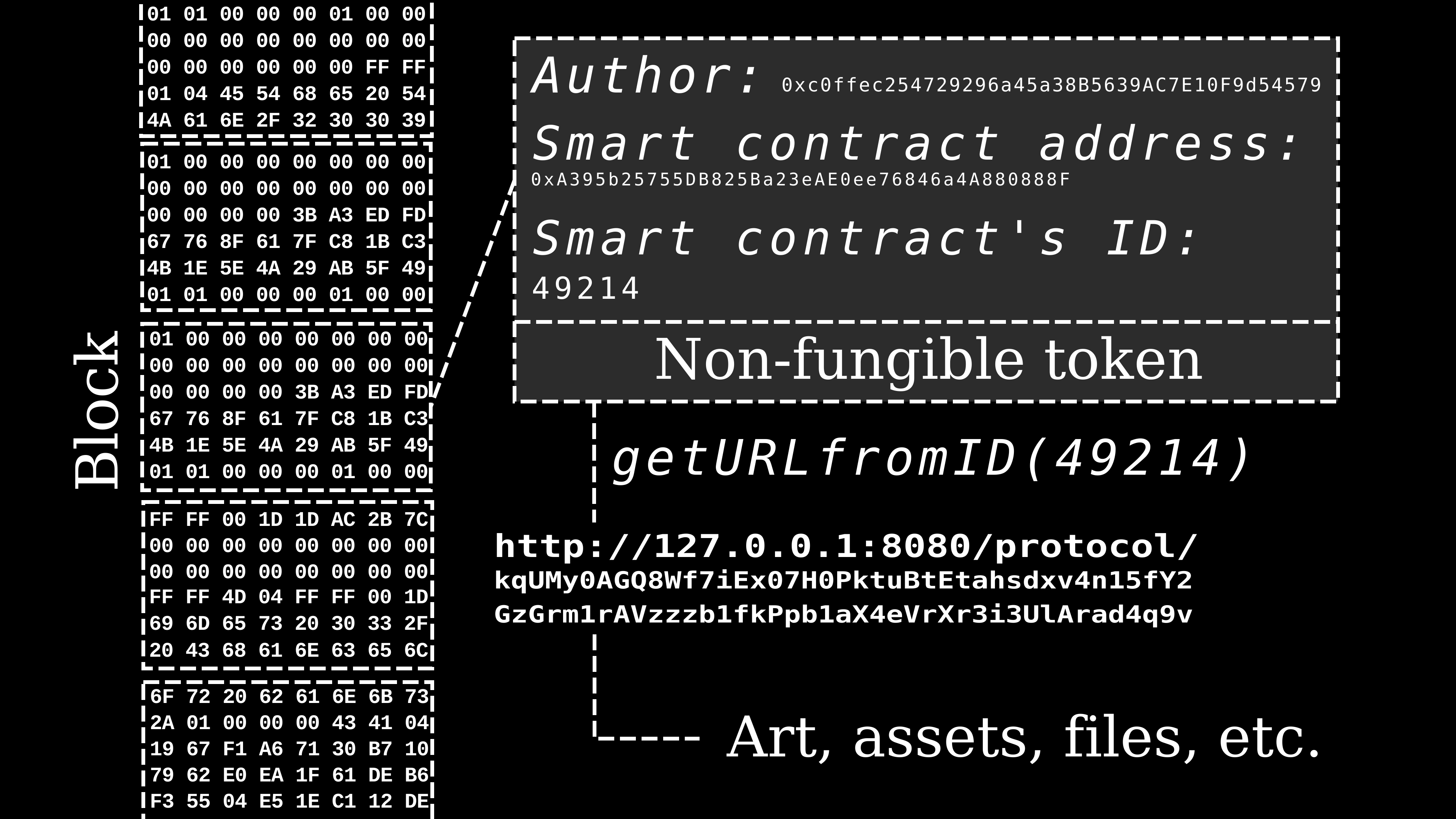
A non-fungible token (NFT) is a unique digital identifier that is recorded on a blockchain and is used to certify ownership and authenticity of a digital item, such as artwork, music, or video. NFTs contain references to digital files and are stored in a wallet, allowing owners to transfer, sell, and trade them.
🔬 How It Works (Mechanics)
The mechanics of NFTs involve the use of smart contracts to create, manage, and transfer ownership of unique digital items. This process is facilitated by cryptocurrencies such as Ethereum, which is the most widely used platform for creating and trading NFTs. The use of blockchain technology ensures that NFTs are secure, transparent, and tamper-proof, making them a reliable way to verify ownership and authenticity.
📊 Key Facts, Numbers & Statistics
NFTs have been used in a variety of real-world applications, including digital art, music industry, and gaming. For example, NFTs can be used to create unique digital collectibles, and their ownership can be transferred, sold, and traded.
🌍 Real-World Examples & Use Cases
Real-world examples of NFTs include their use in the music industry to create unique and scarce digital collectibles, as well as in gaming to create unique in-game items and experiences.
📈 History & Evolution
The significance of NFTs lies in their ability to provide a public certificate of ownership and scarcity, making them a significant development in the digital ownership landscape.
⚡ Current State & Latest Developments
The current state and latest developments of NFTs are highly speculative and volatile, with many experts questioning their value and longevity. Despite this, NFTs continue to be used in a variety of real-world applications, and their potential to create new business models and revenue streams is significant.
🔮 Why It Matters & Future Outlook
The significance and future outlook of NFTs are highly debated, with some experts arguing that they have the potential to revolutionize the way we think about ownership and scarcity in the digital age. Others, however, are more skeptical, arguing that NFTs are a fad or a bubble waiting to burst.
🤔 Common Misconceptions
Common misconceptions about NFTs include the idea that they are only used for digital art or that they are a type of cryptocurrency. However, NFTs can be used to represent ownership of a wide range of unique digital items, including music, video, and even in-game items.
Key Facts
- Category
- events
- Type
- concept
- Format
- what-is
Frequently Asked Questions
What is an NFT?
An NFT, or non-fungible token, is a unique digital identifier recorded on a blockchain that certifies ownership and authenticity of a digital item, such as artwork, music, or video. NFTs are used to create unique and scarce digital collectibles, and their ownership can be transferred, sold, and traded.
How do NFTs work?
NFTs use smart contracts to create, manage, and transfer ownership of unique digital items. This process is facilitated by cryptocurrencies such as Ethereum, which is the most widely used platform for creating and trading NFTs. The use of blockchain technology ensures that NFTs are secure, transparent, and tamper-proof, making them a reliable way to verify ownership and authenticity.